
Scaling business with virtual admin assistants follows a four-stage operational leverage model: first delegating high-frequency administrative tasks to reclaim founder capacity, then systematizing those delegated functions into documented workflows, then expanding VA scope to include client operations and project coordination, and finally building a multi-VA administrative infrastructure that runs autonomously and supports sustained revenue scaling beyond the founder’s personal output ceiling. Entrepreneurs who spend 36-40% of their working week on administrative tasks – as research from Time Etc consistently reports – are operating as their own highest-paid administrator rather than as the chief revenue and strategy officer their business actually needs. The solopreneur-to-seven-figure transition is fundamentally an operational leverage problem: you cannot scale revenue beyond your personal time ceiling until you systematically remove yourself from every function that does not require your specific expertise, relationships, or decision-making authority.


The businesses that reach $1 million and beyond are not typically smarter, luckier, or better at their craft than those that plateau at $200,000 to $400,000. The primary structural difference is that high-revenue solopreneurs and small business operators build operational infrastructure early and protect their capacity for revenue-generating work relentlessly.
Businesses that partner with experienced virtual administrative professionals from the right growth stage gain the infrastructure advantage without the overhead cost of traditional staffing – which is precisely why this model has become a defining characteristic of the modern seven-figure independent business.
This playbook walks through each growth stage, what to delegate at each stage, how to build the systems that make delegation compound over time, and how to avoid the structural mistakes that keep capable operators stuck below their revenue ceiling.
The Four-Stage Model for Scaling Business With Virtual Admin Assistants
The delegation journey is not linear. It follows a predictable progression tied to your revenue level, operational complexity, and how much administrative infrastructure you have built. Skipping stages creates instability; following them creates a compounding advantage.
Quick Overview: The Four Scaling Stages
| Stage | Revenue Range | VA Scope | Primary Goal |
|---|---|---|---|
| Stage 1: Capacity Recovery | $50K-$150K | 10-20 hrs/week – core admin tasks | Reclaim 15-20 hrs/week for revenue activities |
| Stage 2: Systems Building | $150K-$350K | 20-30 hrs/week – documented processes | Convert delegation into repeatable infrastructure |
| Stage 3: Operations Expansion | $350K-$650K | Full-time or near-full-time – client ops | Remove founder from operational execution entirely |
| Stage 4: Infrastructure Scaling | $650K-$1M+ | Multi-VA team or senior VA + support | Build administrative capacity ahead of revenue growth |
Each stage has different delegation priorities, different management requirements, and different risk profiles. Understanding which stage you are in prevents both under-delegation (staying stuck) and over-delegation (delegating before systems exist to support it).
Stage 1 – Capacity Recovery ($50K-$150K Annual Revenue)
At this stage, the founder performs virtually every function in the business personally. Revenue growth has slowed or plateaued not because of a sales problem but because the founder has no remaining capacity to pursue new revenue. Every available hour goes to existing client delivery and administrative maintenance.

The Capacity Bottleneck Diagnosis
Ask yourself these four diagnostic questions:
- Do you regularly work evenings or weekends not because you want to, but because you must to keep up?
- Are there revenue opportunities you have identified but not pursued because you lack the time to execute them?
- Have you delayed responding to prospects because existing operational tasks consumed your available hours?
- When you finish a workday, does the majority of your effort feel like maintenance rather than growth?
If you answered yes to two or more questions, you have a capacity problem – not a skills problem, not a pricing problem, not a marketing problem. Administrative overhead is consuming the capacity your business needs to grow.
What to Delegate at Stage 1
Start with the tasks that occur most frequently and require the least contextual judgment. These tasks deliver the fastest time recapture and build the working relationship with your VA before you delegate more complex functions.
Priority delegations at Stage 1:
- Inbox triage and email response drafting using approved templates
- Calendar management and meeting scheduling across all incoming requests
- CRM data entry and lead record maintenance
- Invoice preparation and follow-up sequences
- Research tasks: competitor monitoring, prospect lists, pre-meeting briefs
- Social media post scheduling (from your approved content)
- Document formatting and file organization
- Vendor and supplier communication coordination
This initial delegation set typically reclaims 15-20 hours per week for a solopreneur operating at Stage 1 scale. At a personal hourly value of $150-$200, that represents $2,250-$4,000 per week in recovered capacity – available to apply directly to client acquisition and revenue generation.
The Stage 1 Success Metric
Stage 1 is complete when: you spend fewer than 10 hours per week on administrative tasks, you have documented SOPs for every delegated function, and you have 20 or more hours per week available for revenue-generating activities.
Stage 2 – Systems Building ($150K-$350K Annual Revenue)
At Stage 2, initial delegation is working. You have recovered capacity and applied it to growth. Revenue has increased. But now a new problem emerges: your VA is executing tasks individually rather than managing systems, and every additional revenue increase creates more operational complexity that flows back to you.
The core challenge at Stage 2 is not adding more tasks to the delegation list. It is converting delegated tasks into documented systems that run without your ongoing supervision.

The E-Myth Problem at Stage 2
Michael Gerber’s foundational business principle – that business owners must work on the business, not in it – applies specifically and urgently at this stage. The pattern he identified is that technically skilled operators build practices that depend entirely on their personal involvement. Scaling requires replacing personal involvement with documented systems.
Your VA becomes the executor of those systems rather than the recipient of ad-hoc instructions. This distinction is critical.
Ad-hoc instruction (Stage 1): “Can you handle the inbox this week?”
Systems-based delegation (Stage 2): “The inbox management SOP is in Notion. Follow the three-tier priority system, use the response templates in the Email Library folder, and send me the EOD summary each day by 5pm your time.”
The difference is not the task. The difference is whether the task can run without your daily involvement.
What to Build at Stage 2
The primary deliverables at Stage 2 are documented systems, not just completed tasks:
- A comprehensive SOP library covering every recurring administrative function
- Email response template libraries organized by communication category
- CRM workflow documentation: lead intake, follow-up sequences, status updates
- A weekly reporting framework: what your VA tracks, measures, and reports
- A client onboarding workflow document covering every administrative touchpoint
- A Context Document that captures your preferences, voice guidelines, and decision parameters
Additionally, Stage 2 is the right time to expand VA scope into client operations support: post-call follow-up sequences, deliverable tracking, satisfaction check-in communications, and renewal or upsell coordination.
The Stage 2 Success Metric
Stage 2 is complete when: your VA can manage their full weekly task scope with fewer than three questions to you per week, your SOPs are sufficiently detailed that a replacement VA could onboard within two weeks, and administrative functions operate to consistent quality standards without daily oversight.
Stage 3 – Operations Expansion ($350K-$650K Annual Revenue)
At Stage 3, your administrative foundation is solid. Systems exist and run. But revenue growth now demands expansion into functions that previously required your direct involvement: client relationship management, project coordination, vendor oversight, and outbound growth support.
Stage 3 is the leverage inflection point. This is where scaling business with virtual admin assistants moves from “saving you time” to “enabling revenue you could not have captured without this infrastructure.”

What Changes at Stage 3
At earlier stages, your VA primarily handled internal operations. At Stage 3, your VA begins managing external-facing workflows that directly touch your clients, prospects, and partners.
This expansion requires:
- Higher communication standards and brand voice consistency
- Deeper contextual knowledge of your clients and their preferences
- Trusted access to your client-facing tools (CRM, email, project management)
- The judgment to handle routine client communications autonomously
This is why relationship investment in the VA role pays compounding dividends. A VA who has worked with you through Stages 1 and 2 understands your clients, your communication style, and your business context without needing briefings. This accumulated contextual knowledge is one of the most undervalued assets in a well-managed VA relationship.
Stage 3 Delegation Priorities
Client Operations:
- Client onboarding workflow management (documents, access provisioning, welcome sequences)
- Regular client communication sequences (check-in emails, progress updates, milestone notifications)
- Meeting preparation: agenda compilation, pre-read distribution, post-meeting summaries
- Satisfaction survey coordination and testimonial request campaigns
- Contract renewal tracking and pre-renewal communication sequences
Project and Operations Coordination:
- Project management tool maintenance (task status updates, deadline tracking, team coordination)
- Vendor and supplier relationship management for ongoing services
- Internal process audits: identifying workflow inefficiencies before they become revenue constraints
- Content calendar management and marketing execution coordination
Business Development Support:
- Prospect research and outreach list preparation
- Lead nurture sequence management within your CRM
- Speaking, podcast, or partnership opportunity coordination
- Proposal formatting, delivery, and follow-up tracking
The Stage 3 Success Metric
Stage 3 is complete when: your VA manages client communications for routine touchpoints without your involvement, project workflows advance without your daily intervention, and your personal time concentrates almost exclusively on high-value client delivery and strategic business development.
Stage 4 – Infrastructure Scaling ($650K to $1M+)
At Stage 4, a single VA handling all administrative functions creates a capacity ceiling of its own. The solution is not to remove delegation; it is to build administrative infrastructure that scales ahead of your revenue growth rather than reacting to it.
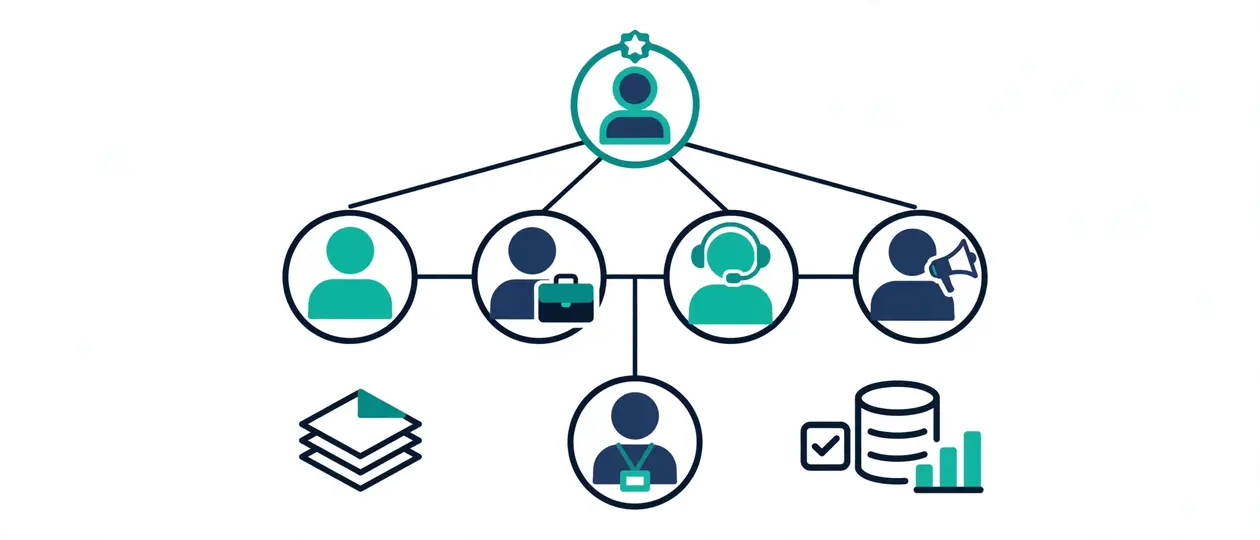
The Multi-VA Administrative Structure
Businesses at Stage 4 typically operate one of three administrative structures:
Option 1: Senior VA + Support VA A senior virtual admin professional who understands the full business context manages a second VA who handles high-volume, lower-complexity tasks (data entry, scheduling, research, formatting). The senior VA maintains quality control without requiring your direct involvement in oversight.
Option 2: Specialized VA Roles Separate VAs with distinct specializations: one for executive administrative support, one for client operations, one for marketing and content coordination. Each operates within their specialty SOP library with minimal cross-function overlap.
Option 3: VA + Project Manager A dedicated project manager (remote) oversees a VA or small VA team, coordinating all administrative functions and interfacing directly with the founder for strategic direction only.
Each structure suits different business models. Service businesses with high client-facing coordination often benefit most from Option 1. Product-oriented or multi-channel businesses typically scale better with Option 2 or 3.
The Stage 4 Infrastructure Checklist
Before scaling to a multi-VA structure, verify that these foundations are in place:
- All core SOPs are documented and accessible to new team members without your explanation
- A communication protocol document governs how the VA team interacts with you and with each other
- CRM, project management, and document management systems are structured for multi-user access
- A quality review system exists that does not require your daily involvement
- Performance metrics and reporting frameworks are established for each VA role
- Onboarding documentation exists that allows new VAs to reach productivity within two weeks
The Operational Leverage Calculator: Quantifying the Scaling Impact
Understanding the financial mechanics of scaling business with virtual admin assistants removes any remaining ambiguity about the ROI of this model.
The Time-to-Revenue Conversion Framework
| Scenario | Hours Reclaimed/Week | Your Hourly Value | Weekly Revenue Potential | Annual Revenue Potential |
|---|---|---|---|---|
| Stage 1 VA (part-time) | 15 hrs/week | $150/hr | $2,250 | $117,000 |
| Stage 2 VA (20 hrs/week) | 20 hrs/week | $200/hr | $4,000 | $208,000 |
| Stage 3 VA (full-time) | 28 hrs/week | $250/hr | $7,000 | $364,000 |
| Stage 4 team (multi-VA) | 35+ hrs/week | $300/hr | $10,500+ | $546,000+ |
These figures represent recovered founder capacity redirected to revenue-generating activities – not guaranteed revenue, but the ceiling of what becomes possible when administrative overhead no longer constrains your available hours.
According to research consistently cited in business operations studies, surveys of small business owners show that 40-60% of working hours go to administrative and operational work rather than revenue-generating activities. Recapturing even half of that percentage, for a founder working 50 hours per week, represents 10-15 additional hours per week available for the work that actually drives growth.
Common Scaling Mistakes When Using Virtual Admin Assistants for Growth
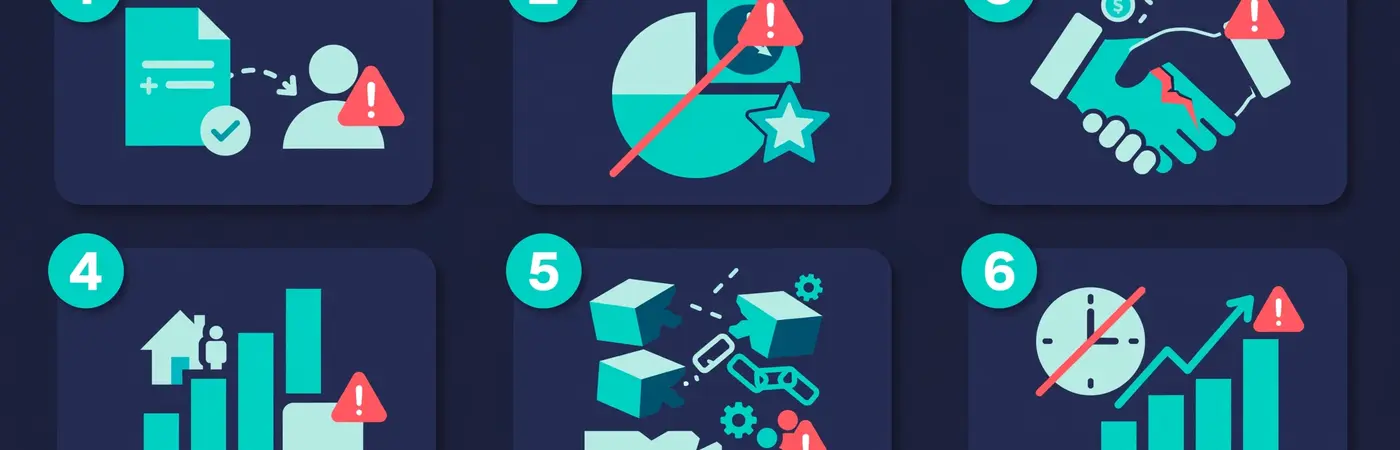
Mistake 1 – Delegating Tasks Before Documenting Them
The most common mistake at every stage: handing work to a VA before defining what “done correctly” means. The result is a cycle of inconsistent output, correction, and re-delegation that consumes more of your time than doing the task yourself. Document first; delegate second.
Mistake 2 – Delegating the Wrong Tasks First
Many founders delegate tasks they personally dislike rather than tasks that consume the most high-value time. The priority is not comfort; it is capacity recapture. Identify the tasks that consume the most hours of your time per week and delegate those first, regardless of how much you enjoy doing them.
Mistake 3 – Treating VA Relationships as Transactional
High-performing VA relationships are professional partnerships that compound in value over time. VAs who understand your business deeply, know your clients, and operate with accumulated contextual knowledge deliver dramatically more value per hour than VAs continuously replaced in search of lower rates. Invest in the relationship; the return is a business asset that appreciates.
Mistake 4 – Not Scaling VA Scope Alongside Revenue
Many founders hire a part-time VA at Stage 1 and never expand scope as they grow. The result: their administrative infrastructure stays calibrated for a $150,000 business while they are trying to operate a $500,000 one. Administrative capacity must scale in parallel with revenue, not lag behind it.
Mistake 5 – Attempting Stage 4 Infrastructure Without Stage 2 Systems
Businesses that try to build multi-VA teams without documented SOPs, communication protocols, and quality frameworks create coordination chaos rather than scale. The stages exist for a reason: each one builds the foundation that makes the next one stable.
Mistake 6 – Measuring Admin Time Instead of Recovered Capacity
Tracking how many hours your VA worked is a cost metric. Tracking how many additional hours of revenue-generating activity you completed because of their work is a return metric. Measure what matters: not the input, but the output your freed capacity produces.
Expert Tips for Maximizing Scaling Business With Virtual Admin Assistants

Tip 1 – Build Your SOP Library Before You Feel Like You Need It
The time to document your processes is when they are working smoothly – not during a crisis or a transition. Every week, have your VA document one new process they have been executing verbally. Within three months, you have a 12-15 SOP library that makes every future delegation and every future team expansion dramatically faster.
Tip 2 – Hire One Stage Ahead of Your Current Needs
The optimal VA hire is not the one calibrated to your current complexity; it is the one who can grow into the next 12-18 months of your business. A Stage 2 business benefits from hiring a VA with Stage 3 experience so the relationship is positioned to expand rather than requiring replacement during a critical growth period.
Tip 3 – Create a Weekly Capacity Audit
Every week, spend 15 minutes auditing your time log. Identify any task you completed personally that your VA could own with the right SOP. Add it to your delegation pipeline. The most productive business operators treat capacity recapture as an ongoing project rather than a one-time event.
Tip 4 – Use Revenue Milestones as Delegation Triggers
Set explicit delegation triggers tied to revenue performance: “When monthly recurring revenue reaches $X, I expand VA scope to include client communication management.” This removes the emotional and cognitive friction of deciding when to delegate more by converting it into a rules-based decision made in advance.
Tip 5 – Protect Your Revenue-Generating Hours Explicitly
After delegating administrative functions, the reclaimed time does not automatically become revenue-generating. Block it intentionally in your calendar: “Monday and Wednesday 9am-12pm: business development.” Without explicit protection, reclaimed capacity fills with unproductive activities rather than growth work.
Frequently Asked Questions About Scaling Business With Virtual Admin Assistants
When should a solopreneur hire their first virtual admin assistant?
The optimal first VA hire occurs when administrative tasks consume more than 15 hours of your working week and you can identify specific revenue opportunities you are not pursuing because of time constraints. Most solopreneurs hit this threshold between $75,000 and $120,000 in annual revenue. Earlier adoption accelerates the path through Stage 1 significantly.
How many hours per week should a VA work when you are scaling your business?
Start with 10-15 hours per week to delegate core high-frequency tasks. Expand to 20-25 hours once Stage 1 systems are documented and running. Move to full-time (35-40 hours) at Stage 3 when client operations support becomes necessary. Scale to a multi-VA structure at Stage 4 when a single VA’s capacity constrains your operational output.
What is the ROI of scaling business with virtual admin assistants compared to hiring in-house staff?
The cost comparison consistently favors virtual admin professionals. Labor cost savings of 40-78% compared to U.S. in-house hiring are well-documented across multiple industry benchmarks. More critically, the operational model eliminates payroll taxes, benefits, office overhead, and equipment costs – making the total cost of virtual admin support 50-70% lower than an equivalent in-house role with comparable output capacity.
What tasks should a solopreneur delegate first when scaling their business?
Prioritize delegation by task frequency and time cost rather than task complexity. Email management, calendar scheduling, CRM data entry, research tasks, and document formatting consistently represent the highest-frequency tasks in solopreneur businesses. Delegating these first reclaims the most hours the fastest, providing immediate capacity for growth activities.
Can you scale to seven figures using only virtual admin support, without hiring full-time employees?
Yes. As of mid-2025, a significant share of seven-figure businesses operate without traditional full-time employees, using virtual admin professionals, specialized contractors, and AI tooling as their operational infrastructure. The model works best for service-based, consulting, and knowledge businesses where the primary value-creating activities are concentrated in the founder’s expertise rather than distributed across a large delivery team.
How do you ensure quality control when scaling business with virtual admin assistants?
Quality control at scale requires three elements: documented output standards in your SOP library defining what “done correctly” looks like for every task; a systematic review protocol specifying which outputs you review personally versus approve by exception; and a regular performance calibration process – monthly at minimum – comparing actual output quality against your defined standards and adjusting SOPs accordingly.
Scale Is an Infrastructure Decision, Not a Revenue Decision
The path from solopreneur to seven-figure operator is not primarily a marketing challenge, a product challenge, or even a sales challenge. For most capable operators who have already proven their value proposition, it is an infrastructure challenge.
Scaling business with virtual admin assistants resolves that challenge by systematically removing the administrative overhead that caps your personal capacity, building the operational systems that make delegation compound over time, and creating the infrastructure that allows your business to grow beyond what your individual working hours can physically support.
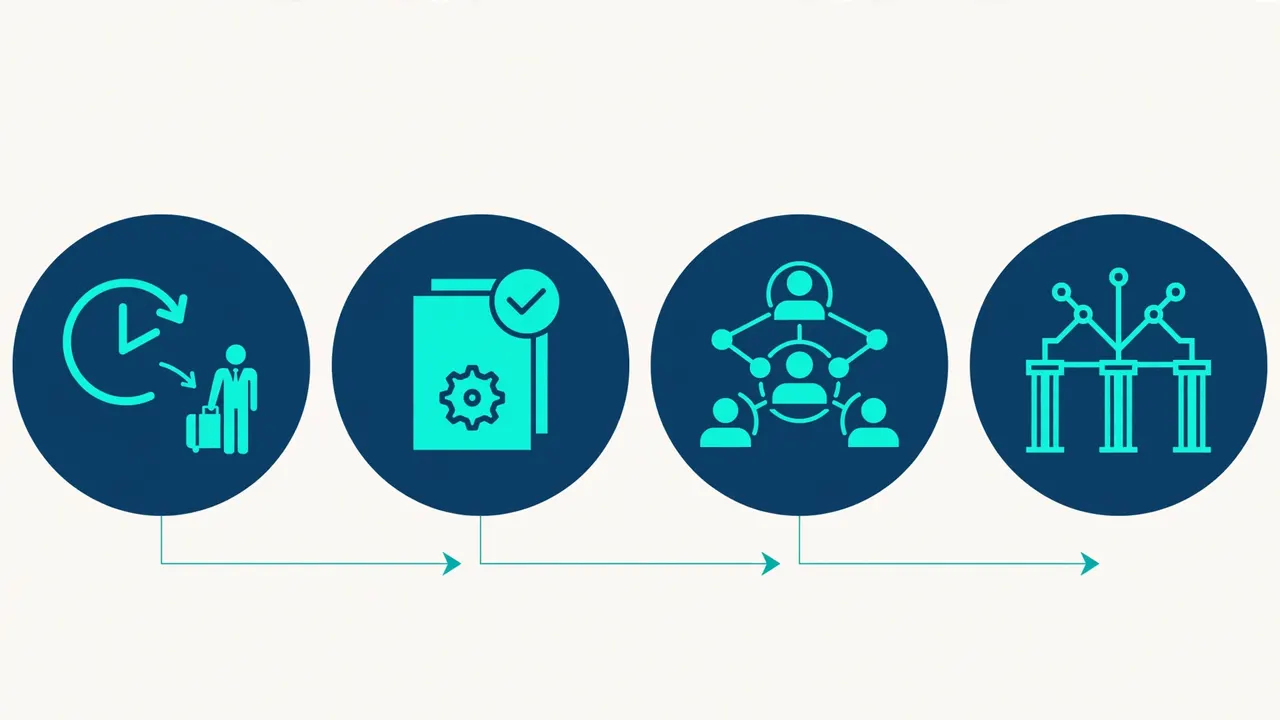
The four-stage model makes the path concrete:
- Stage 1: Reclaim 15-20 hours per week through core task delegation
- Stage 2: Convert delegation into documented systems that run without supervision
- Stage 3: Expand VA scope to client operations and remove yourself from execution entirely
- Stage 4: Build multi-VA infrastructure that scales ahead of revenue growth
Each stage builds on the previous one. Each stage makes the next one possible. And each stage delivers a measurable return: more hours for growth, more revenue from those hours, and an operational foundation that can support the business you are building rather than constraining it.
The founders who reach seven figures are not the ones who worked harder than you. They are the ones who stopped working on tasks that did not require their specific expertise – earlier, more systematically, and with better infrastructure than their competitors.
If you are ready to build that infrastructure with the right administrative professionals supporting your specific growth stage, connect with skilled virtual admin professionals who are matched to your business model, operational complexity, and scaling objectives from day one.